The Science of Gratitude and Why Our Moms Rock
February 2, 2026
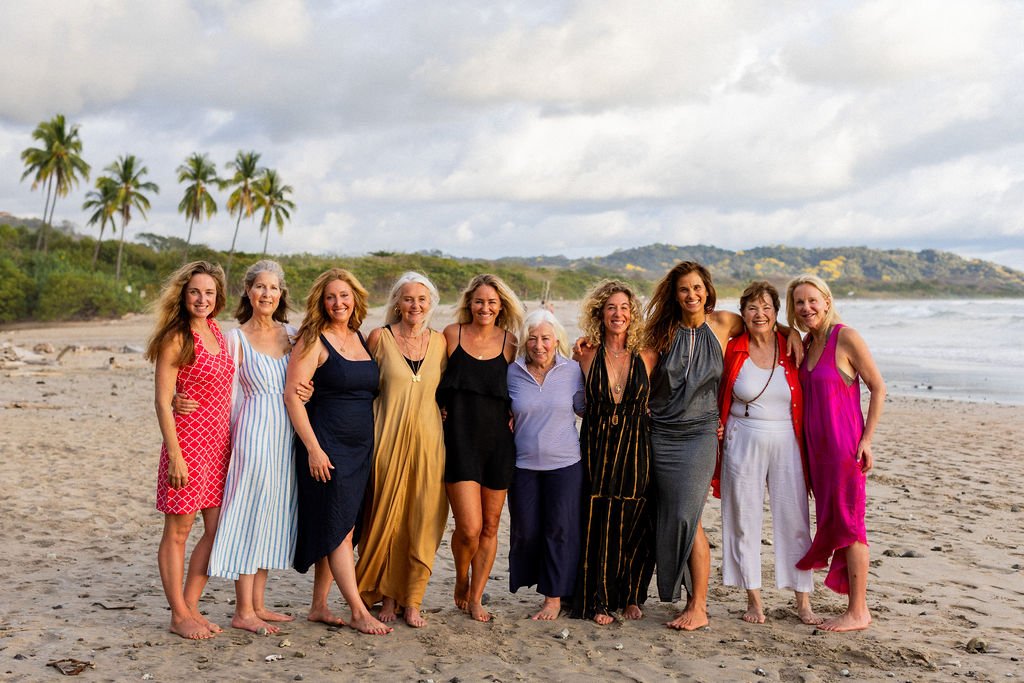
Two cool things coincided this week that I am grateful to share about. One, I just returned from a week-long retreat I hosted for some of my closest friends and our moms in Costa Rica. Two, I randomly listened to a podcast by Andrew Huberman, professor of neurobiology and ophthalmology at Stanford School of Medicine, called “The Science of Gratitude and How to Build a Gratitude Practice”.
I’ve been studying Spiritual Psychology principals since 2013 and am well aware of the benefits of gratitude as a practice. One of my values that I have displayed above my dining room table, in 4-year-old kid writing, is, “Focus on What’s Working”. For me, it is a practice, just like the tag line of the organization I started "Lead with Love" when we say “Choose Love”. As if it’s a choice. Is it? Sometimes it doesn’t feel like it. And that’s exactly where practice comes in. I recently, like last night, felt the swell of heat that comes from a triggering situation. I felt the rapid thoughts, the righteousness, the need to explain myself and to make my point. I felt the distance, the sadness, the upset. It’s right in there that awareness of choice comes, but only with practice. I thought about retreating to my room to do some deep, calming breaths like the books I read my kids instruct or a practice of free form writing to clear the judgments that were forming causing the righteousness, the blaming, the hopeless/helpless feeling. I didn’t do it. Instead, I sent several rapid texts. In re-reading them I can see I wasn’t regulated in that moment, so many typos and crude language. Oooops. I can do better. I know better. Begin again.
Back to gratitude as a practice. Is it just about reframing everything and saying to myself what a wonderful opportunity this situation is for me to grow and evolve? Can I just say I am so grateful for all of my “teachers” whether Donald Trump and ICE or those I live with who do things I don’t like or prefer? According to Huberman, a gratitude practice isn’t quite so simple. It’s not just about creating lists of things we’re grateful for or reframing situations to excavate learning. The science of gratitude tells us that the most potent effects of gratitude from a neurological perspective are receiving gratitude. So, can you all write some letters of gratitude please??!! Absent sitting around waiting for someone to notice how fabulous you are and tell you so your neurons can light up and bring benefits to your being, you can listen to stories of inspiration and resilience from other people and receive the benefits! This is according to Huberman, who is a pretty smart guy and cites a bunch of academic papers. I highly recommend his podcast and the one I referenced above in particular to learn more.
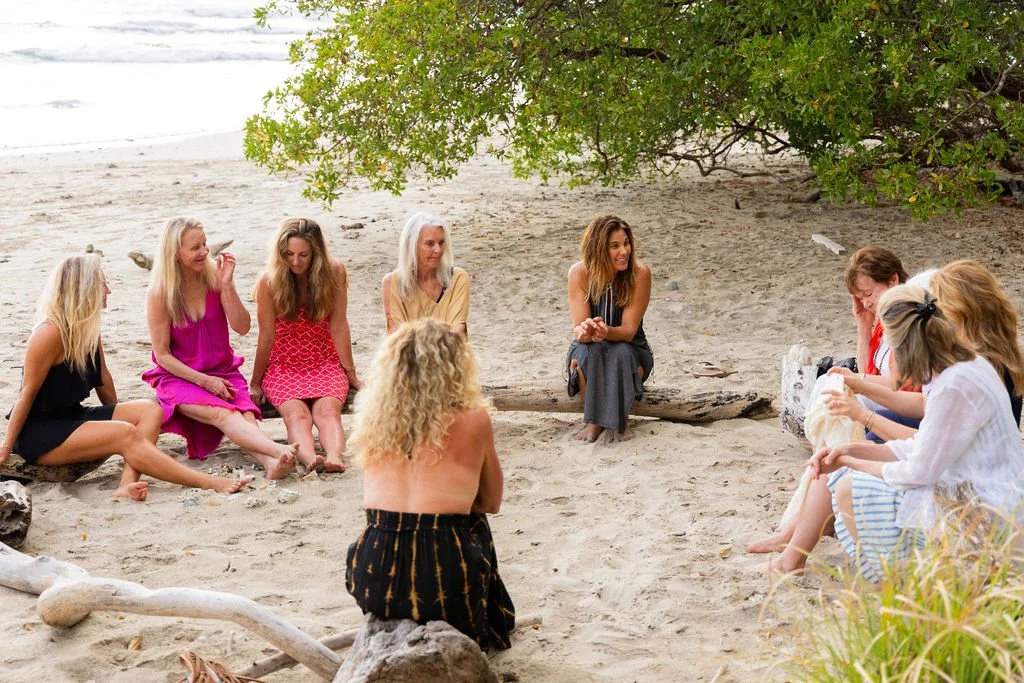
What’s cool is, after this retreat that I led with a few of my beautiful friends last week, we were basking in all the love and gratitude of the gift we had given each other by taking the time and energy and spending the money to create a retreat together in a beautiful place. I will admit, the original retreat idea did not include our moms. It was a friend retreat. But, a voice came to me one morning as I was putting it together that said, “Invite your mom.” I was surprised and thought to brush it off, but decided to socialize the idea with my other friends. We were all equally nervous and excited. As time went on, we were much more excited and touched by the opportunity, than nervous. You see, we do a lot of “work” and think our moms might not be quite as evolved as us and therefore wouldn’t want to do the types of things we do on retreats. Ha! We knew immediately we were full of shit and our moms have so much wisdom to share and that we absolutely had to do it so we did.
As I was reorienting after the retreat at home receiving so many messages of love and gratitude from the participants I was really feeling a high. Then, it seemed out of the blue I found this Huberman podcast and clicked on it and he began to narrate my experience backed by science. There is so much joy in giving and I am deeply blessed that I can share with others things that I love and enjoy and think are helpful. What I didn’t realize is it's actually quite selfish as I am receiving so many real world physiological benefits from giving and sharing. Not everyone says thank you, but mostly they do. According to Huberman, the secret sauce for an effective gratitude practice is to take it in, whether people are giving thanks to you for your love and generosity or you are receiving the story from another person about their experience of being helped or saved.
It’s another coincidence I guess that I watched two movies on the plane that gave me that gift of witnessing someone else express and feel gratitude in a way that deeply touched me. One was “Nobu”, the documentary about Nobu Matsuhisa who shares about his friend that helped him in his darkest times. The other, “Soul on Fire” about a young boy almost burned to death in a fire and the helpers that came to support his journey back to life. Wow! Inspiring stories and lots of good neurons firing. Gratitude! I topped it off by watching a documentary that some friends of mine helped produce called, “Come See Me in the Good Light” about the spoken word poet Andrea Gibson who died recently from cancer. If I felt at all daunted by turning 50 this year and forgot to feel grateful for growing older that movie changed that. I celebrate it! I celebrate the moms and their wisdom, laughter and ever-present love that we experienced on our retreat. I celebrate the moments of being a mom even though I wish every day I could be 15 years younger and have 15 years more with my little babes (I started late). I have these moments. I have these years. I have these gifts to give and to receive. Thank you. Thank you.
This post originally appeared in my monthly column in The Aspen Times.
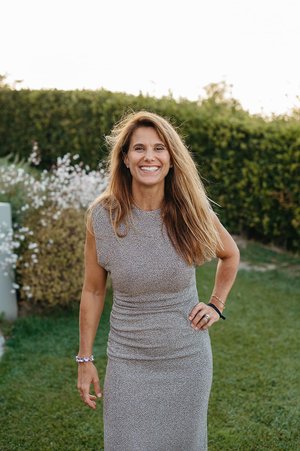
Gina Murdock
Founder, Lead With Love
Aspen-based writer, yoga and meditation teacher, and community organizer. Gina writes a monthly column for The Aspen Times and founded Lead With Love to shift culture from fear to love. More about Gina →
Never Miss a Letter
The Heartbeat lands in inboxes monthly — reflections on leading from the heart and caring for those who care for others.
Subscribe